Healthcare is changing, not in a loud or dramatic way, but through small operational shifts that are fixing long-standing inefficiencies. Hospitals and clinics are under constant pressure with more patients, more data, and higher expectations. Yet many workflows still depend heavily on manual work, which slows things down and increases the chances of errors.
This is where healthcare process automation comes in. It helps streamline routine tasks, reduce operational friction, and bring more structure to everyday workflows. Instead of teams spending hours on repetitive work, systems can handle it more efficiently.
The result is simple: smoother operations, better patient experiences, and less stress on healthcare staff. And honestly, that is something the industry has needed for a while now.
The Growing Need for Smarter Healthcare Operations
If you have ever worked inside a healthcare setup, or even observed closely, you will notice one thing: teams are constantly busy, but not always productive.
Increasing Workload and Operational Pressure
Patient numbers are rising. Documentation requirements are increasing. Regulations are not getting simpler. Staff are stretched thin, and it shows.
Too Many Manual Tasks Slowing Down Efficiency
From filling forms to updating records, a lot of work is still repetitive. It eats up hours, and most of it does not need human attention anymore.
Errors and Delays Affecting Patient Experience
A missed update. A delayed billing entry. A wrong appointment slot. Small mistakes stack up and eventually impact patient trust.
Why Traditional Systems Are No Longer Enough
Legacy systems were built for a different time. They store data, but they do not act on it. That gap is becoming more obvious every day.
What Is Healthcare Process Automation?
Healthcare process automation means using technology to handle routine tasks without manual effort. Things like scheduling, billing, data entry, and reminders can all be done automatically.
How It Replaces Repetitive Manual Tasks
Instead of someone manually updating patient records or sending reminders, systems take over. Once set up, they simply keep running.
Difference Between Automation and AI-Driven Automation
Basic automation follows rules. AI automation learns and improves over time.
For example, automation sends appointment reminders at fixed times, while AI automation learns when patients are most likely to respond and adjusts timing accordingly. Small difference, big impact.
Where It Fits in Daily Healthcare Operations
It fits almost everywhere: front desk, billing, patient communication, and internal coordination. It is not limited to one department. It supports the entire workflow.
How AI Is Powering Modern Healthcare Operations
Automation alone is helpful. But when AI gets involved, operations become smarter, not just faster.
How AI Makes Automation Smarter, Not Just Faster
AI does not just execute tasks. It analyzes patterns and identifies what is working and what is not.
Learning From Data to Improve Workflows
Over time, systems learn from patient behavior, staff interactions, and operational outcomes. This leads to better scheduling, fewer errors, and smoother workflows.
Reducing Delays and Improving Decision-Making
Instead of waiting for issues to happen, AI can flag them early, such as predicting appointment no-shows or identifying billing inconsistencies before they become bigger problems.
Moving Towards Proactive Operations
This is the real shift. Healthcare operations are moving from reactive to proactive, and that changes everything.
How Healthcare Process Automation Works in Real Settings
A simple workflow often looks like this: input, system, action, outcome.
- A patient books an appointment
- The system records it instantly
- A reminder is sent automatically
- Staff members are notified
- The patient shows up on time
No manual follow-ups are needed, and the process moves with far less friction.
Integration With Existing Systems
Modern healthcare process automation solutions do not replace existing systems. They connect records, billing, scheduling, and communication tools so information flows without disruption.
Real-Time Updates and Minimal Human Effort
Everything updates instantly. There is no waiting, no duplicate entry, and much less confusion.
Handling Large Volumes Efficiently
Whether it is 50 patients or 500, the system does not slow down. That is a major advantage for growing healthcare providers.
Key Areas Where Healthcare Operations Are Improving
Automation is not limited to one function. It improves multiple parts of healthcare operations.
Patient Registration and Onboarding
Digital forms, auto-filled data, and instant record creation reduce queues and speed up intake.
Appointment Scheduling and Reminders
Patients can book online, and reminders go out automatically, which helps reduce missed appointments.
Medical Records Management
Data updates in real time, become easier to access and reduce paperwork across teams.
Billing and Insurance Processes
Invoices, claims, and verifications can be streamlined, helping error rates drop significantly.
Internal Coordination Between Teams
Doctors, nurses, and admin staff stay on the same page with fewer delays and less back-and-forth communication.
Real-World Use Cases of Healthcare Operations Automation
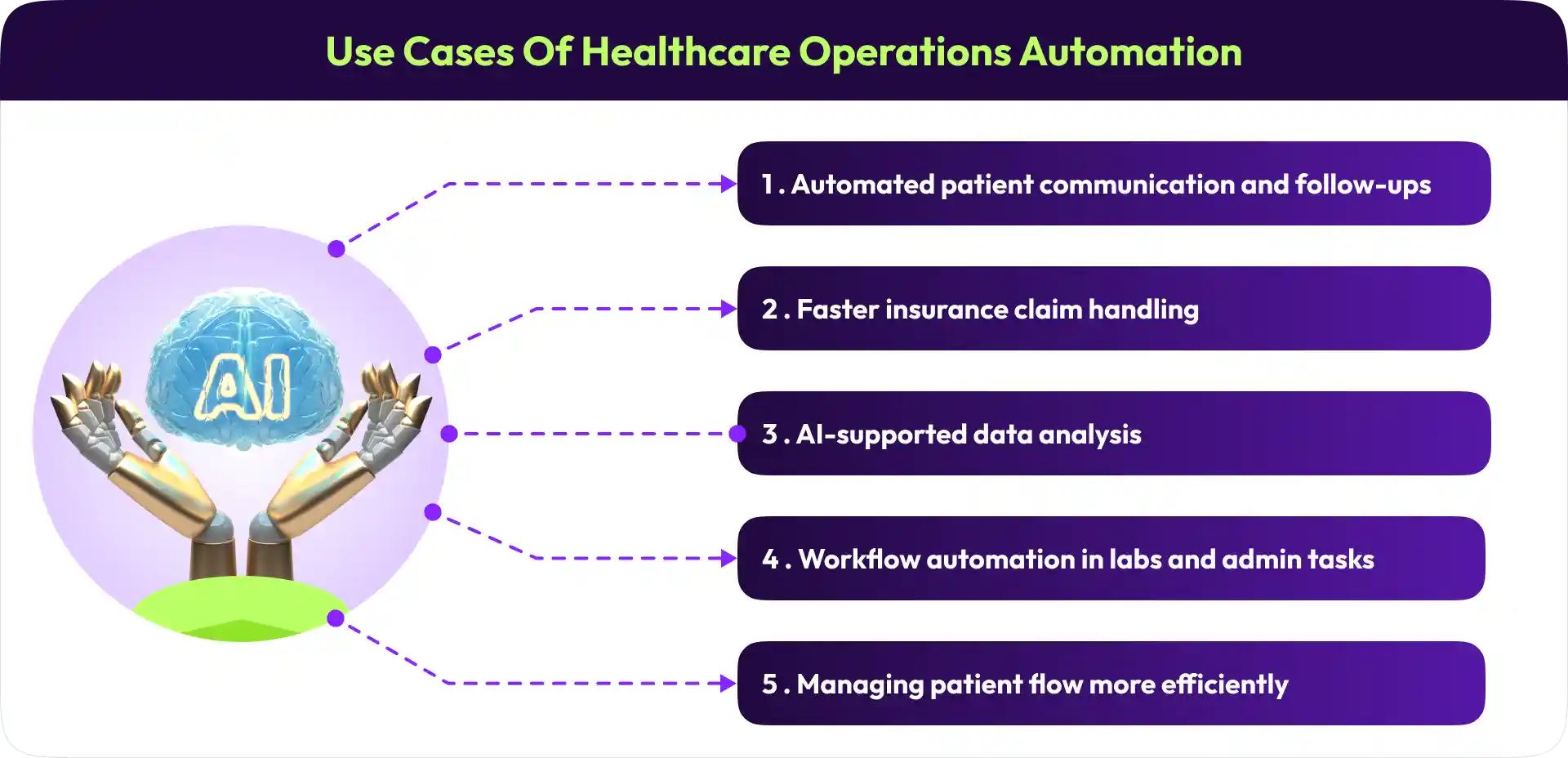
Automated Patient Communication and Follow-Ups
Patients often need reminders for appointments, medication, and follow-ups. Instead of staff manually reaching out, automated systems send messages at the right time with the right information, improving engagement without increasing workload.
Faster Insurance Claim Handling
Insurance processing used to take days, and sometimes weeks. Automation speeds this up by verifying patient details, checking eligibility, and submitting claims automatically. That reduces manual errors and can improve approval rates.
AI-Supported Data Analysis
Healthcare generates a huge amount of data, and much of it goes unused. AI can analyze patterns, identify risks, and provide insights that help teams make better decisions, such as predicting peak hours or spotting recurring billing issues.
Workflow Automation in Labs and Admin Tasks
Lab reports, test results, and approvals involve multiple steps. Automation ensures each step happens in sequence without delays, reducing turnaround time and manual coordination.
Managing Patient Flow More Efficiently
From entry to consultation to discharge, patient flow can become chaotic. Automation helps by tracking movement, updating queues in real time, and supporting smoother transitions between departments.
Benefits of Adopting Automation in Healthcare
The benefits are not only operational. They also affect staff, patients, and the overall experience of care delivery.
Saves Time for Staff and Patients
Automation removes repetitive work, giving staff more time to focus on patient care. Patients also spend less time waiting or dealing with preventable delays.
Reduces Errors in Repetitive Tasks
Manual processes are prone to mistakes, especially when tasks are repeated many times a day. Automation improves consistency by following the same workflow every time.
Improves Operational Speed and Efficiency
Processes that once took hours can happen in minutes. Scheduling, billing, and reporting all become faster, which improves efficiency across the organization.
Enhances Patient Experience
Patients expect smoother and faster service. From quick registrations to timely updates, automation helps healthcare providers meet those expectations more consistently.
Allows Staff to Focus More on Care
Healthcare professionals did not choose this field to spend most of their time on administrative work. Automation helps shift their attention back to what matters most: patient care.
Common Challenges in Adopting Automation
While the benefits are clear, adoption is not always straightforward. There are a few common challenges organizations need to work through.
Difficulty Integrating With Older Systems
Many healthcare providers still rely on legacy systems. Integrating modern automation tools with them can be tricky and sometimes requires customization.
Data Security and Compliance Concerns
Healthcare data is highly sensitive. Any automation system must comply with strict regulations, which naturally makes organizations cautious.
Staff Resistance to Change
People get used to certain ways of working. New systems can create hesitation, whether from concerns about learning new tools or worries about changing job responsibilities.
Lack of a Clear Starting Strategy
A common issue is not knowing where to begin. Without a clear plan for what to automate first, adoption can feel overwhelming.
There are many solutions available, but not all of them fit every organization. Choosing the wrong tool can create more complications instead of solving problems.
How Alris Helps Simplify Healthcare Operations
The right platform makes a major difference, and Alris AI is designed specifically for healthcare operations.
AI-Powered Automation Tailored for Healthcare
Instead of generic workflows, Alris offers automation built around healthcare processes such as patient communication, workflow management, and internal coordination.
Simplifies Complex Workflows Without Disruption
One of the biggest concerns with automation is disruption. Alris AI works alongside existing systems, so providers do not need a complete operational overhaul.
Easy Integration With Existing Systems
It connects with EHRs, billing platforms, and communication tools smoothly, reducing implementation effort and complexity.
Scalable Solutions Based on Business Needs
Whether it is a small clinic or a large hospital network, the platform adapts as operational needs grow.
Helps Teams Move From Manual to Efficient Operations
The transition can start small. Teams can automate a few key processes first and expand over time, making change feel manageable instead of overwhelming.
Future Trends in Healthcare Operations (2026 and Beyond)
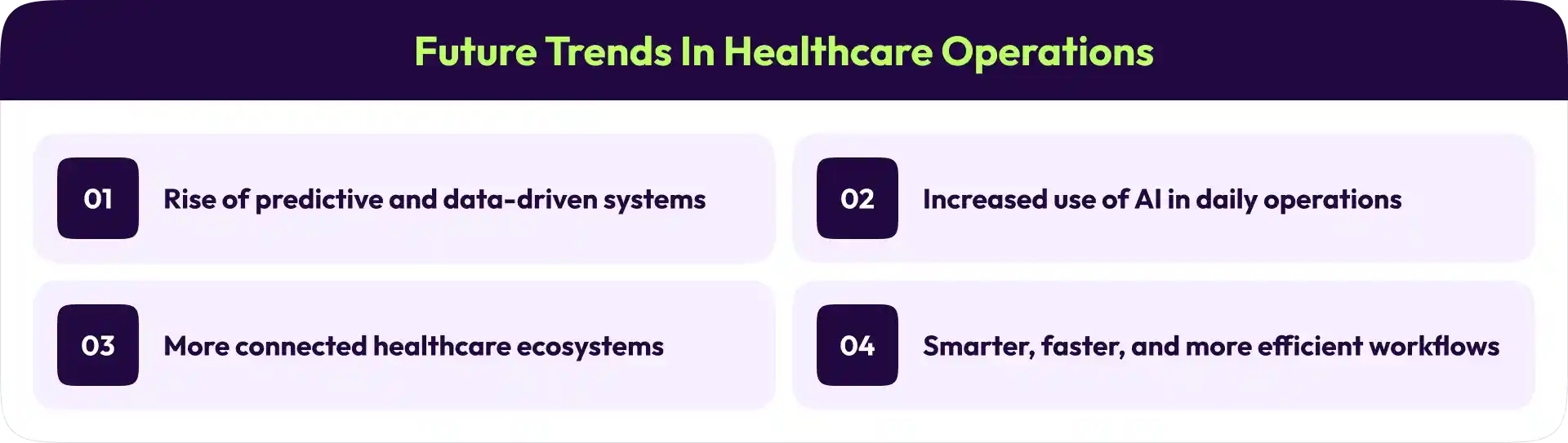
Rise of Predictive and Data-Driven Systems
Healthcare systems will not just respond to actions. They will increasingly predict them, such as anticipating patient demand or identifying potential delays before they happen.
Increased Use of AI in Daily Operations
AI will become a standard part of healthcare workflows, not something extra, but something expected.
More Connected Healthcare Ecosystems
Different systems will communicate better with one another, allowing data to move more seamlessly across platforms and reducing operational silos.
Smarter, Faster, and More Efficient Workflows
Workflows will continue to improve with less manual intervention, fewer delays, and better outcomes. The shift may be gradual, but it is steady.
Conclusion
Healthcare operations are going through a quiet transformation. It is not always visible, but it is definitely happening. Manual processes are slowly being replaced, automation is reducing workload, and AI is adding intelligence to everyday tasks.
The impact is clear: faster operations, fewer errors, and better patient experiences. Adopting healthcare process automation is no longer only about staying competitive. It is about staying functional in a system that is becoming more demanding every year. Organizations that adapt early will find it easier to scale, manage workloads, and deliver better care.
Frequently Asked Questions (FAQs)
1. What is healthcare process automation, and how does it work?
Healthcare process automation uses software and AI to handle routine tasks like scheduling, billing, and communication. It follows predefined workflows to reduce manual work and improve efficiency across operations.
2. How is AI automation different from basic healthcare automation?
Basic automation follows fixed rules, while AI automation learns from data and improves over time. It helps predict outcomes, optimize workflows, and make operations more intelligent.
3. What are the key benefits of healthcare operations automation?
It reduces manual tasks, improves accuracy, speeds up workflows, and enhances patient experience. It also allows staff to focus more on care instead of administrative work.
4. Which healthcare processes can be automated first?
Common starting points include patient registration, appointment scheduling, billing, and insurance verification. These are repetitive workflows that usually deliver quick efficiency gains.
5. Is healthcare process automation secure and compliant?
Yes, most modern solutions follow strict healthcare regulations with features such as data encryption, access control, and secure data handling.
6. How can healthcare providers get started with automation?
The best way to begin is by identifying repetitive tasks and automating them step by step. Platforms like Alris AI help healthcare providers introduce automation smoothly without disrupting existing systems.